
Every parent has experienced moments when their child becomes overwhelmed by frustration, disappointment, or excitement. Maybe a sibling takes their favorite toy, a homework assignment feels impossible, or plans unexpectedly change. What starts as a small situation can quickly turn into big emotions.
For children, learning how to manage those feelings is an important part of growing up. Emotional self-control doesn't mean never getting upset. It means recognizing emotions, understanding how they influence behavior, and learning to respond thoughtfully rather than reacting impulsively.
At WIN Martial Arts, we believe these skills deserve just as much attention as physical strength. Through structured training, positive encouragement, and consistent expectations, martial arts gives children opportunities to practice managing their emotions in a supportive environment.
Understanding the Difference Between Feelings and Actions
One of the most important lessons children can learn is that all feelings are valid, but not every reaction is appropriate.
It's normal to feel angry when something seems unfair or disappointed when things don't go as expected. However, yelling, pushing, or giving up doesn't have to be the response.
Children need guidance to understand that they can experience strong emotions while still making responsible choices.
Martial arts provides opportunities to practice this distinction.
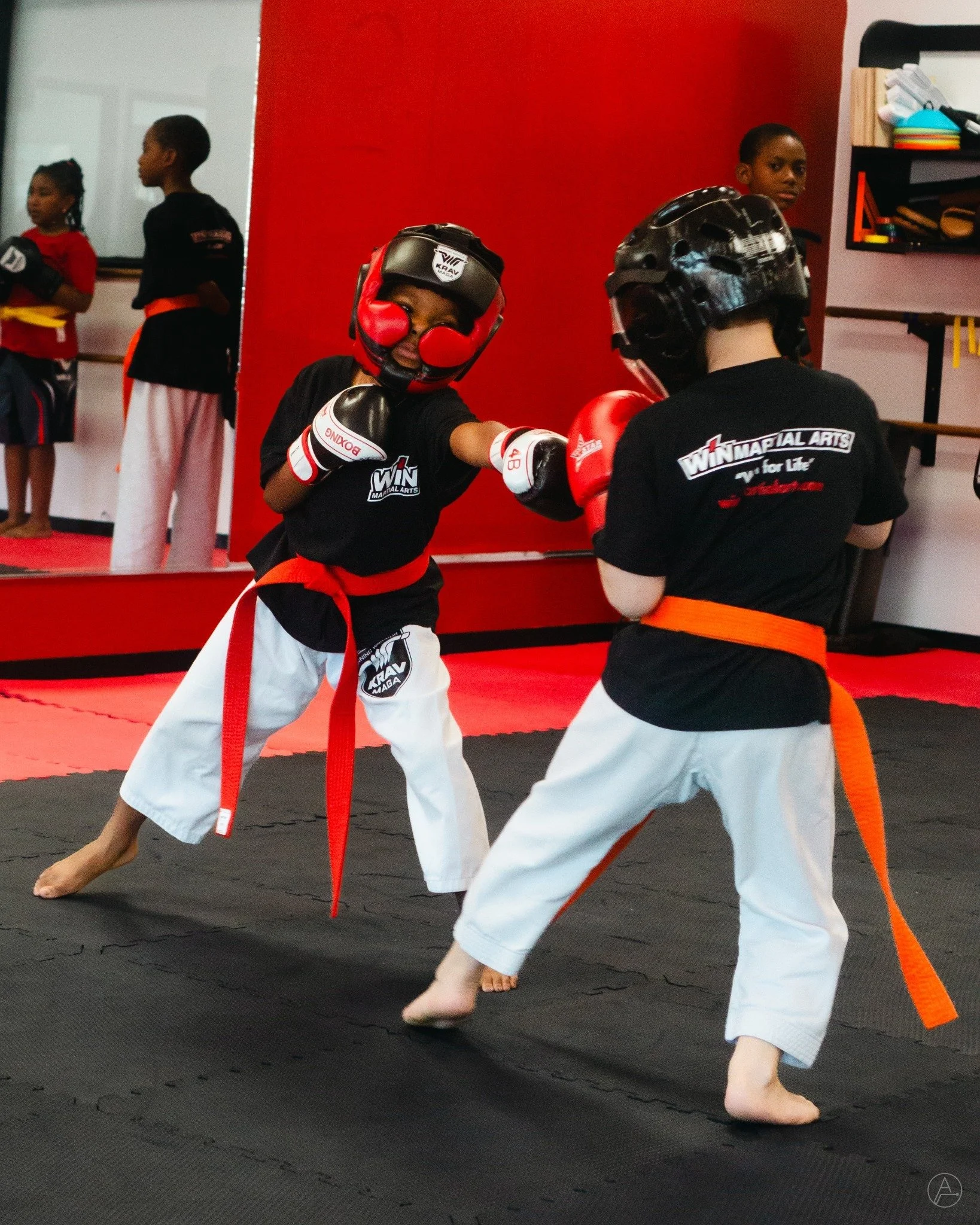
During training, students may become frustrated when a technique is difficult or disappointed when they don't perform as well as they hoped. With encouragement from instructors, they learn to recognize those feelings, regain their composure, and continue participating appropriately.
These experiences reinforce the idea that emotions don't have to control our actions.
Learning to Pause Before Reacting
When children feel overwhelmed, their first reaction is often immediate. They may speak without thinking, become upset, or walk away from a challenging situation.
Learning to pause is a valuable skill that takes time and practice.
In martial arts, students regularly practice listening, observing, and responding to instructions. They learn that successful movements require awareness and control rather than rushing.
Partner exercises also encourage students to think before acting, maintain appropriate boundaries, and adjust their movements based on the situation.
These habits can help reinforce an important everyday lesson: taking a moment to think can lead to better decisions.
At home, parents can encourage this same approach by reminding children to pause, take a breath, and consider what they want to do next.
Building Confidence Through Emotional Challenges
Children sometimes become discouraged when they struggle with something unfamiliar. They may worry about making mistakes, disappointing others, or not being good enough.
When these feelings become overwhelming, avoiding the challenge can seem easier than continuing.
Martial arts encourages students to approach difficult situations with patience and determination.
Rather than expecting immediate success, students learn that progress comes through repetition, effort, and a willingness to improve.
Each time a child works through frustration and successfully completes a challenging activity, they gain experience managing difficult emotions.
Over time, these moments can help students become more confident in their ability to handle setbacks.
The goal isn't to eliminate frustration. It's to help children recognize that they can experience discomfort and still move forward.
Teaching Respect During Difficult Moments
Emotional self-control also plays an important role in how children treat others.
It's easy to demonstrate kindness when everything is going well. Showing respect when frustrated, disappointed, or upset requires greater maturity.
At WIN Martial Arts, students are encouraged to treat instructors and training partners with consideration, regardless of how they're feeling.
They practice listening to feedback, communicating appropriately, and maintaining control during partner activities.
These expectations help reinforce that respect isn't something we demonstrate only when we're in a good mood.
It's a responsibility we carry into every interaction.
This lesson can be especially valuable in friendships, sibling relationships, and classroom environments where disagreements are inevitable.
Helping Children Practice Emotional Control at Home
Parents can reinforce emotional self-control through simple, consistent conversations and routines.
Here are a few ways to help children develop healthier responses to big feelings:
Name the emotion. Help your child identify whether they're feeling frustrated, disappointed, nervous, or overwhelmed.
Model calm responses. Children learn by watching how adults handle stress and disagreements.
Practice during calm moments. Talk through challenging situations before emotions become overwhelming.
Offer appropriate choices. Give children opportunities to decide how they can respond or solve a problem.
Recognize positive responses. Acknowledge moments when your child demonstrates patience, self-control, or thoughtful decision-making.
Remember that emotional regulation develops gradually. Consistency, encouragement, and age-appropriate expectations are more valuable than expecting perfection.
Building Stronger Kids at WIN Martial Arts
At WIN Martial Arts, our philosophy of Work, Improve & Never Quit extends beyond learning physical techniques.
We want students to understand that true strength includes patience, self-awareness, respect, and the ability to make good decisions during challenging moments.
Through martial arts training, children have opportunities to practice managing frustration, communicating respectfully, and taking responsibility for their reactions.
These are valuable life skills that can support them at school, at home, and in their relationships with others.
Because the first person every leader must learn to lead is themselves.
We All WIN Together.
Interested in helping your child develop confidence, self-discipline, and emotional self-control? Contact WIN Martial Arts today to learn more about our youth martial arts programs and how we help children grow both on and off the training floor.
