
Self-Defense Starts Before You Ever Throw a Punch
When most people hear the words “self-defense,” they picture a physical confrontation—blocking a strike, escaping a grab, or defending themselves against an attacker.
But effective self-defense begins long before anything physical happens.
At Win Martial Arts, we want students of all ages to understand that some of the most important self-defense skills are awareness, decision-making, confidence, and knowing when to leave a situation. Physical techniques matter, but the goal should always be to avoid danger whenever possible.
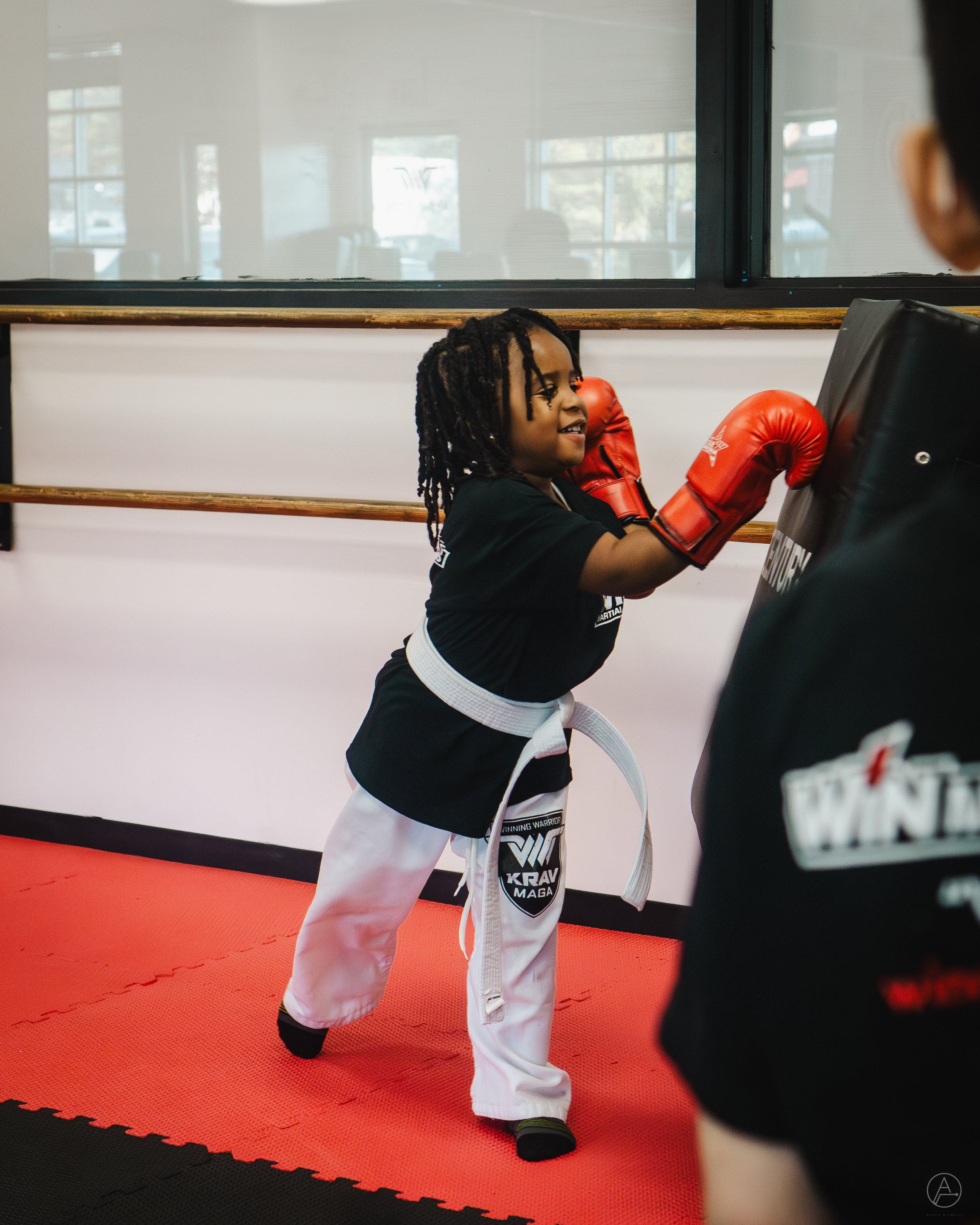
That’s one of the reasons Krav Maga training can be valuable for children, teens, and adults alike. We aren’t simply learning how to fight. We’re learning how to recognize situations, make decisions under pressure, and protect ourselves and the people around us.
Awareness Is Your First Line of Defense
How often do we walk through a parking lot while looking at our phones? Or arrive somewhere without really noticing who or what is around us?
For children, awareness might mean noticing when they've wandered too far from a parent in a crowded place. For teenagers, it could mean paying attention to their surroundings when they're with friends. For adults, it may mean recognizing something unusual while walking to a vehicle.
Situational awareness doesn't mean living in fear.
It means being present.
Students can learn to notice exits, recognize changes in their surroundings, trust when something doesn't feel right, and make decisions before a situation becomes dangerous.
Avoiding a Situation Is a Strength
There can be a misconception that knowing martial arts means being willing to fight.
We teach something very different.
If you recognize a potentially dangerous situation and can safely leave, you've already used an important self-defense skill.
Walking away isn't weakness.
Creating distance isn't weakness.
Asking for help isn't weakness.
Those decisions demonstrate judgment and self-control—two qualities we work to develop in our students.
For kids especially, this lesson matters. We want children to know that learning self-defense doesn't give them permission to use physical skills whenever there's a disagreement. Instead, they learn to use their voice, seek help, create distance, and make smart choices first.
Confidence Can Change How You Respond
Confidence plays an important role in personal safety.
When people panic, they may freeze or struggle to decide what to do next. Training gives students opportunities to practice responding to challenges in a controlled environment.
Over time, they become more comfortable staying focused when something feels difficult or unexpected.
That confidence can help a child speak loudly and clearly when a boundary is crossed. It can help a teenager recognize when it's time to leave an uncomfortable situation. It can help an adult respond more intentionally rather than simply reacting.
Real confidence isn't believing nothing bad will ever happen.
It's trusting yourself to make a good decision when something unexpected does happen.
Physical Skills Are the Final Layer
Sometimes awareness and avoidance aren't enough. That's where practical self-defense training becomes important.
Krav Maga teaches students techniques designed for real-world situations while emphasizing the larger goal: protect yourself, create an opportunity to escape, and get to safety.
Students practice skills repeatedly so movements become more familiar and reactions become more intentional.
But the physical technique is only one part of the lesson.
Students are also developing coordination, focus, discipline, emotional control, and resilience every time they train.
Self-Defense Is a Family Conversation
Safety shouldn't only be something families discuss after something frightening happens.
Parents can begin simple conversations now.
Talk about paying attention in public. Discuss what children should do if they become separated from you. Teach them which adults they can ask for help. Practice using a strong voice. Encourage teenagers to trust their instincts when something feels wrong.
When families reinforce these lessons at home and students practice them through training, self-defense becomes more than a collection of techniques.
It becomes a mindset.
Work. Improve. Never Quit.
At Win Martial Arts, our philosophy is built into everything we teach:
WIN = Work, Improve & Never Quit.
Students work to develop their skills. They improve through practice and correction. And they learn not to quit when something becomes challenging.
For our youth students, those lessons are also part of becoming leaders. And the first person they learn to lead is themselves.
Knowing when to speak up, when to walk away, when to ask for help, and when action is necessary all require self-leadership.
That's why our training goes beyond punches and kicks.
We're helping students become more aware, capable, confident, and prepared.
Because when we learn, practice, and grow together, We All WIN Together.
