
Teaching Kids the Difference Between Being Brave and Taking Unnecessary Risks
We want our kids to be brave. We want them to stand up for themselves, try difficult things, speak with confidence, and know they are capable of handling challenges.
But there's another side of bravery that children need to learn: being brave doesn't mean putting yourself in unnecessary danger.
Sometimes courage means speaking up. Sometimes it means walking away. Sometimes it means finding an adult. And sometimes it means trusting the feeling that tells you something isn't right.
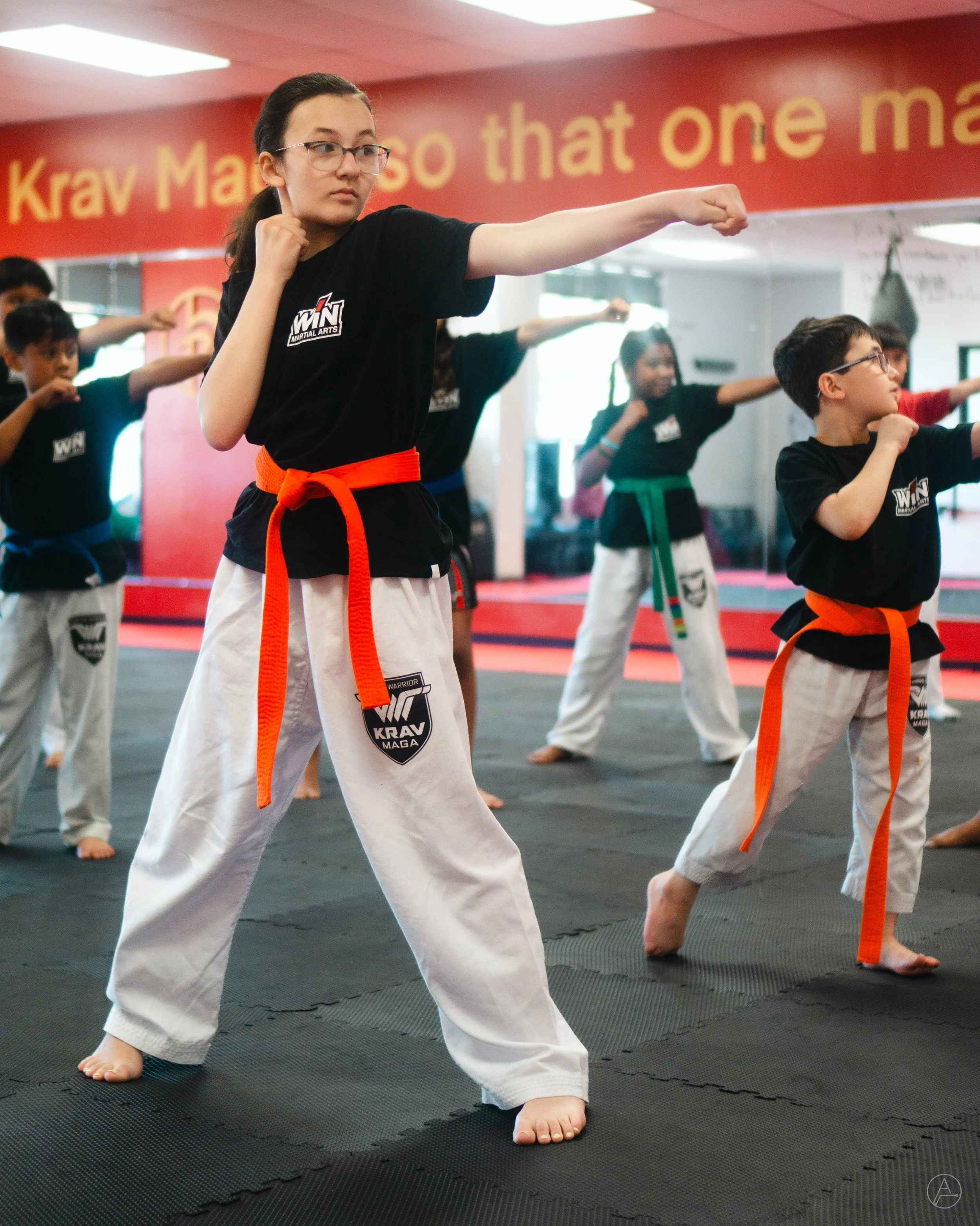
At Win Martial Arts, these lessons are an important part of developing confident, capable young leaders. Martial arts and Krav Maga aren't simply about teaching children how to physically defend themselves. They're also about helping kids develop the judgment to know when—and when not—to act.
Being Tough Isn't the Same as Being Brave
Children receive plenty of messages about being "tough."
Don't be scared. Don't back down. Prove yourself.
But those messages can create confusion when a child encounters a difficult situation at school, on the playground, in the neighborhood, or online.
Real confidence doesn't require proving anything.
A confident child can say, "I'm not doing that."
A confident child can leave a group that's making a bad decision.
A confident child can tell an adult when something doesn't feel right.
And a confident child can walk away from someone trying to provoke them.
Those choices aren't signs of weakness. They're examples of self-control.
Teach Kids to Trust Their Instincts
One of the most valuable safety lessons we can give children is permission to listen to their instincts.
Children don't always have the words to explain why a person or situation makes them uncomfortable. They may simply know that something feels "off."
Instead of teaching kids to ignore those feelings for the sake of being polite, we can teach them to pay attention.
That might mean moving closer to a trusted adult, leaving an area, speaking up clearly, or asking for help.
Situational awareness is a major part of practical self-defense. The sooner children learn to notice what's happening around them, the better prepared they become to make smart decisions.
Your Voice Is a Self-Defense Tool
Physical self-defense should never be a child's first response to an everyday conflict.
Before using their hands, children should know how to use their voice.
A strong, confident:
"Stop."
"Back up."
"Don't touch me."
can communicate an important boundary.
Training gives children opportunities to practice speaking confidently while maintaining control of their emotions. That's especially important because knowing what to say and actually being able to say it under pressure are two different things.
Practice helps bridge that gap.
Walking Away Can Be the Strongest Choice
For children especially, there's often social pressure not to "back down."
But knowing you could respond physically and choosing not to is a powerful form of discipline.
At Win Martial Arts, we want students to understand that the goal of self-defense is safety—not winning an argument.
If a child can safely leave a situation, get help, or create distance, that's a win.
Physical skills are there when they're truly needed, but judgment comes first.
The First Person You Lead Is Yourself
This is where self-defense and leadership become closely connected.
At Win Martial Arts, we believe we're developing young leaders—and the first person they learn to lead is themselves.
Self-leadership means controlling your reactions when you're angry.
It means making a good decision when friends are making a bad one.
It means having the confidence to establish boundaries.
It means knowing when to ask for help.
And it means continuing to think clearly when a situation becomes uncomfortable.
These skills aren't only useful during childhood. They're foundations children can carry into their teenage years and adulthood.
Work. Improve. Never Quit.
Our WIN philosophy—Work, Improve & Never Quit—is about much more than progressing in martial arts.
Students Work to develop skills and discipline.
They Improve through practice, mistakes, and challenges.
And they learn to Never Quit on becoming stronger, more responsible, and more confident versions of themselves.
Sometimes "Never Quit" means persevering through something difficult.
But it doesn't mean staying in an unsafe situation.
Knowing the difference is part of growing up.
Helping Kids Become Confident and Capable
We can't prepare children for every situation they'll encounter.
What we can do is give them tools.
We can teach awareness.
We can practice boundaries.
We can build confidence.
We can teach practical self-defense.
And most importantly, we can help children develop the judgment to decide which tool a situation actually requires.
At Win Martial Arts, that's the kind of strength we're working to build.
Not children who are looking for a fight, but young people who are confident enough to protect themselves, disciplined enough to control themselves, and prepared enough to make smart decisions.
Because when our students become stronger leaders of themselves, our entire community becomes stronger.
We All WIN Together.
